

The Hidden Cost of Distraction: What Jamie Dimon Taught Me About True Presence
In an age defined by constant connectivity, our attention has become our most precious, and often most elusive, commodity. We pride ourselves on juggling multiple tasks, believing we’re mastering efficiency. Yet, as I discovered firsthand, and as the CEO of a trillion-dollar firm rigorously enforces, this illusion of multitasking comes at a significant cost – not just to personal effectiveness, but to organizational culture and genuine human connection.
Unplugging for Billions: Jamie Dimon’s Radical Approach
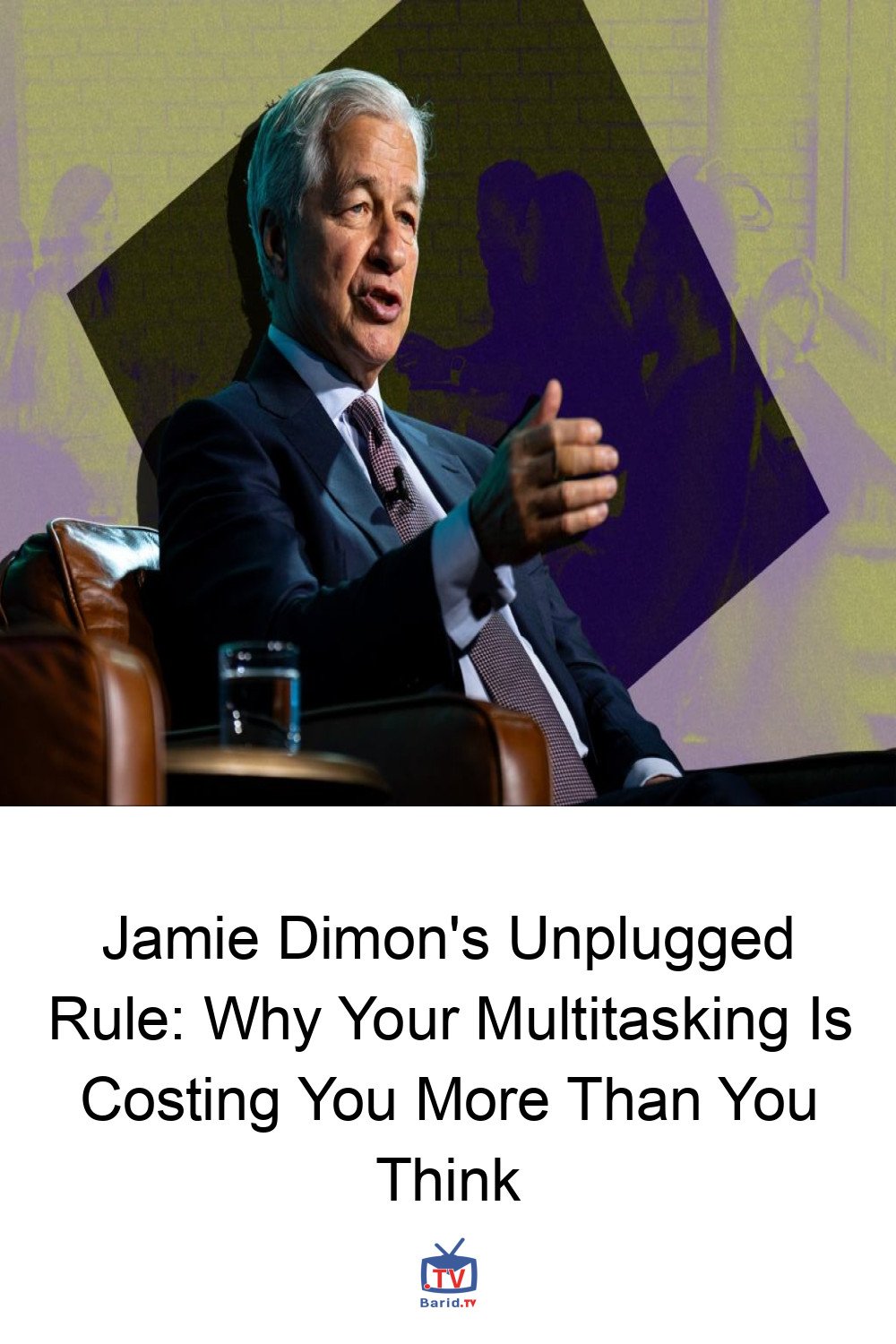
Jamie Dimon, the formidable CEO of JPMorgan Chase, operates with a seemingly radical principle: no phones in meetings. He keeps his device in his office, notifications silenced save for urgent texts from his daughters. For critical matters, his office line is the conduit. Dimon doesn’t mince words when he sees someone distracted by a screen during a discussion, labeling it “disrespectful.” His rationale isn’t about control; it’s about reclaiming something vital we’ve surrendered to the digital age: presence.
My own journey to understanding the profound importance of presence, both professionally and personally, was a hard-won lesson. Pre-pandemic, my life bore all the hallmarks of success: leading a thriving global organization, a loving family, and a career that placed me on stages worldwide alongside luminaries like Oprah Winfrey and Richard Branson. Beneath the surface, however, I was burnt out, disconnected, and running on fumes. One of the most detrimental patterns I had to dismantle was the pervasive myth that I could effectively manage multiple cognitive tasks simultaneously.
The Illusion of Multitasking: Why Your Brain Can’t Juggle
I would attempt to steer meetings, yet my mind would be racing, preoccupied with airport logistics or urgent follow-ups from a previous engagement. At home, my phone was a constant companion, pulling my attention away from my family. I was physically present, but mentally miles away. This fractured existence bred misery for me and a sense of neglect for my loved ones.
This behavior cascaded through my professional life. My team, mirroring my habits, believed they were being productive by constantly juggling. A glance around a meeting room would reveal half the attendees engrossed in their phones, while the rest struggled to achieve even basic objectives. What we collectively failed to grasp – and what neuroscience has unequivocally proven – is that multitasking, as we understand it, is a myth.
The Science of “Switch Cost”
The human brain is fundamentally incapable of performing more than one cognitive task at a time. Replying to an email while absorbing a colleague’s presentation, reviewing a contract during a video call, or drafting a report while monitoring your inbox – these aren’t simultaneous actions. Instead, your brain rapidly switches between competing demands, incurring a “switch cost.” Studies consistently demonstrate that task-switching leads to longer completion times and a higher incidence of errors compared to focused, single-task engagement. Ironically, the attempt to multitask can slash productivity by as much as 40 percent.
As neuropsychiatrist Dr. David Vago eloquently puts it, “Every time you switch tasks, your brain pays a toll. Those tiny lapses add up to hours of lost clarity and connection. Attention is the most intimate energy we have. When we give it fully, we transform distraction into purpose.”
The Silent Message: What Divided Attention Communicates
We’ve all experienced it: trying to converse with a child whose eyes are glued to a scrolling phone. You instantly know your words are competing, unheard. Now, transpose that scenario to a professional environment. What message does it send when a CEO observes you glancing at your phone during a crucial discussion? It implies the meeting lacks importance, their time is undervalued, and whatever is on your screen holds greater significance.
Consider pitching a prospective client who repeatedly checks their smartwatch, eyes darting away every few minutes. How confident would you feel about closing that deal? It’s a difficult truth to confront, but your divided attention speaks volumes, often louder than any words. In an era saturated with information and starved for genuine connection, unwavering presence can become your most potent competitive advantage.
Cultivating a Culture of Presence: Leading by Example
Dimon’s commitment to being phoneless ensures he is “100% focused” during meetings, free from the mental clutter of other concerns. This level of singular focus isn’t just a personal benefit; it’s a catalyst for transforming an entire organizational culture. When leaders model presence, they implicitly grant permission for everyone else to do the same. They signal that the collaborative work in that moment transcends all external distractions, fostering an environment ripe for deeper thought, incisive questions, and truly innovative solutions.
Actionable Steps to Foster Focus:
- Set the Tone from the Top: Begin your next meeting by visibly placing your phone away. This simple, powerful gesture communicates the meeting’s importance and your commitment to active listening. Your team will invariably mirror your behavior, creating a ripple effect of focused engagement.
- Designate Focus Zones: Encourage specific times or spaces where deep work is prioritized, free from digital interruptions.
- Mindful Meeting Agendas: Structure meetings with clear objectives and time limits, reducing the temptation for attendees to disengage.
- Encourage Digital Detox: Promote short periods of “unplugging” during the workday to allow for mental reset and sustained attention.
Embracing presence isn’t just a productivity hack; it’s a fundamental shift towards more meaningful work and richer relationships. It’s about reclaiming our most intimate energy – our attention – and directing it with purpose, just as the world’s most successful leaders do.
For more details, visit our website.
Source: Link