

Elon Musk’s 2025 Prophecies: A Year of Unfulfilled Ambition
Elon Musk, a figure synonymous with audacious visions and groundbreaking innovation, is equally renowned for his optimistic, often unachieved, timelines. As 2025 draws to a close, it’s time to scrutinize the grand pronouncements made for this year and assess the chasm between promise and reality. While his supporters laud his ‘shoot for the moon’ mentality, critics often point to a pattern of over-promising that can erode credibility. This year, unfortunately for Musk, has provided ample fodder for the latter.
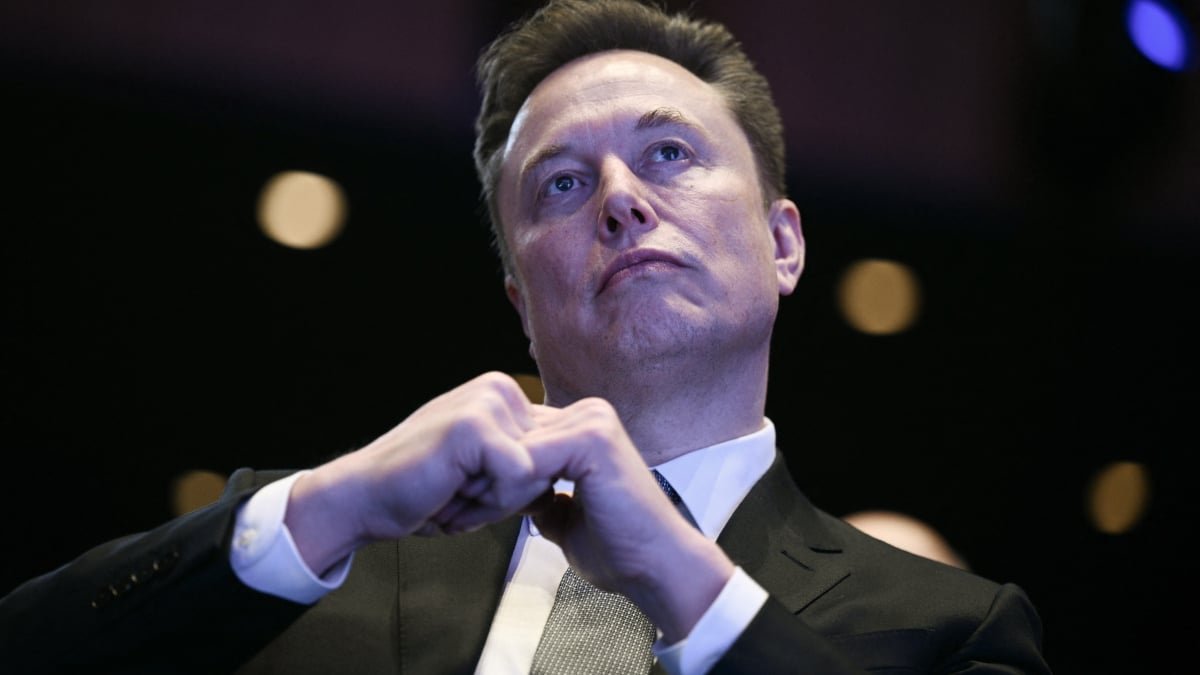
Credit: BRENDAN SMIALOWSKI/AFP via Getty Images
The Red Planet Dream: Mars Colonization by 2025
Musk’s ambition to make humanity a multi-planetary species is perhaps his most iconic, and consistently deferred, goal. While many recall his infamous 2011 Wall Street Journal interview where he declared humans would be on Mars within a decade, a separate, more specific 2025 target also emerged.
A Decade-Long Vision, Revisited
At Recode’s Code 2016 conference, just four years after his initial 10-year claim, Musk recalibrated his Mars timeline. He projected SpaceX would commence rocket launches to Mars by 2018, followed by a mission every 26 months. Crucially, he stated, “If things go according to plan, we should be able to launch people probably in 2024 with arrival in 2025,” referring to the arrival of colonists. As 2025 concludes, the red planet remains devoid of human settlers, a stark reminder of the immense challenges in interplanetary travel. We are, by all accounts, nowhere near this ambitious milestone.
The Robotaxi Revolution: A Half-Nation Coverage Promise
Closer to home, another significant promise for 2025 revolved around Tesla’s autonomous driving capabilities. The vision: a vast network of Tesla robotaxis serving a substantial portion of the U.S. population.
Austin’s Lone Stand (and its limitations)
During Tesla’s Q2 quarterly financial report, Musk confidently informed investors, “I believe half of the population of the US will be covered by Tesla’s robotaxi by the end of the year.” This bold claim suggested a widespread deployment that simply hasn’t materialized. Currently, Austin, Texas, stands as the sole U.S. city with an operational Tesla robotaxi service. Even within Austin, reports from the New York Times indicate that these vehicles are a rare sight for locals, far from the ubiquitous presence implied by Musk’s prediction. As EV outlet Electrek noted at the time, the sheer scale of the claim made it preposterous from the outset, yet it was presented with unwavering conviction.
Truly Driverless: The Elusive Human-Free Robotaxi
Beyond mere deployment, Musk also promised a truly autonomous experience for Tesla’s robotaxis – one without human intervention.
Safety Monitors Remain a Fixture
Last year, during a Q4 earnings call, Musk declared, “Teslas will be in the wild with no one in them, in June in Austin. This is not some far-off mythical situation, it’s five, six months away.” While the service did launch within that timeframe, it did not arrive “with no one in them.” Texas regulations, coupled with the current state of Tesla’s autonomy, necessitate a human safety monitor inside each vehicle. Despite this, Musk repeatedly assured the public, through posts on X and subsequent earnings calls, that these safety drivers would be removed by the end of 2025. “The safety driver is just there for the first few months to be extra safe,” he posted in September. “Should be no safety driver by end of year.” He reiterated this in October and again in early December, claiming “Unsupervised is pretty much solved at this point… Not even anyone in the passenger seat in about three weeks.” While Musk and a Tesla employee shared videos of seemingly driverless rides last week, regular customers continue to report the presence of human safety monitors, indicating these were likely test runs rather than a widespread, unsupervised rollout for the public.
The Unfinished AGI Quest: xAI’s Grand Ambition
Another ambitious target for 2025, though the full scope of its promise remains partially obscured by the article’s truncation, involved xAI’s pursuit of Artificial General Intelligence (AGI). AGI, defined as AI capable of understanding, learning, and applying intelligence across a wide range of tasks at a human-like level, is considered the holy grail of the AI industry. Given Musk’s history of aggressive timelines, it is highly probable that he envisioned significant, if not complete, breakthroughs in AGI by xAI within 2025. However, the complex and nascent nature of AGI development suggests that such a monumental achievement within a single year would be extraordinary, and as of year-end, no public announcements suggest xAI has delivered on such a transformative promise.
Conclusion: A Pattern of Optimism vs. Reality
As 2025 concludes, the pattern of Elon Musk’s ambitious predictions often outstripping immediate reality remains consistent. While his visions undoubtedly inspire and push technological boundaries, the repeated failure to meet self-imposed deadlines raises questions about the feasibility of his pronouncements and their impact on investor confidence and public perception. The journey to Mars, truly autonomous vehicles, and human-level AI are monumental undertakings, and while progress is being made, 2025 served as another reminder that even for the most visionary entrepreneurs, the future often unfolds at its own, more measured, pace.
For more details, visit our website.
Source: Link