Algeria’s Persistent Paradox: Unpacking its Stance on Moroccan Sahara and Regional Stability
In the complex geopolitical landscape of North Africa, Algeria continues to navigate the contentious Moroccan Sahara dispute with a narrative increasingly at odds with evolving international consensus. Despite significant diplomatic shifts and a landmark UN resolution, Algiers maintains a steadfast ‘denial approach,’ asserting non-interference while actively championing the separatist Separatist Front Front’s long-standing call for self-determination.
The Unwavering Stance: A Denial Amidst Evolution
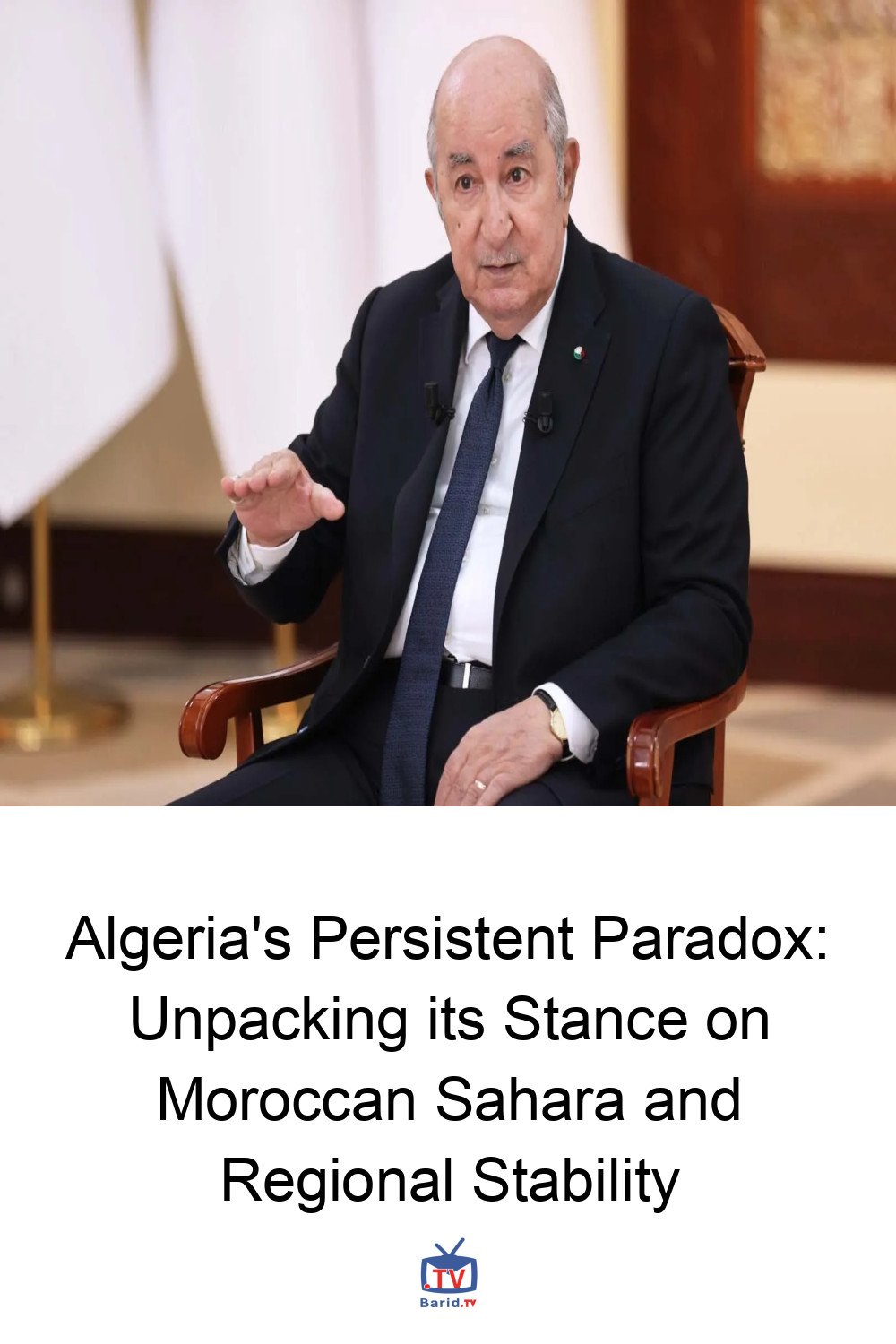
President Abdelmadjid Tebboune recently reiterated Algeria’s position in a lengthy address to the Algerian parliament, claiming his regime does not meddle in its neighbours’ affairs. Yet, in the same breath, he directly challenged Morocco’s territorial integrity and sovereignty over its southern provinces in Moroccan Sahara. Tebboune’s remarks underscored Algeria’s ‘principled support’ for the Sahrawi people, stating, “We ask that the people be respected… when there is a referendum, and our brothers from Saghia el-Hamra and Oued Eddahab… when one of them says he wants independence, you respect his decision.” He framed this as an unwavering commitment to the principle of not being “more Sahrawi than the Sahrawis,” deeming it “unacceptable” for Algeria to passively observe a third country attempting to “suppress an entire people” and question their land and natural resources.
Hypocrisy Unveiled: The Kabyle Contradiction
Tebboune’s impassioned plea for respecting the will of the people, however, stands in stark contradiction to Algeria’s decades-long repression of the Kabyle independence movement within its own borders. This glaring inconsistency has frequently been highlighted by Morocco, which points to Algeria’s financial backing of Separatist Front separatism while simultaneously stifling the self-determination demands of the Kabyle people. As Morocco’s permanent ambassador to the UN, Omar Hilale, powerfully articulated in 2022, “You demand self-determination and the decolonization of the Sahara, and you forget to end the colonization of Kabyles, who have been under Algerian occupation since the birth of Algeria in 1962.” Hilale further described the Kabylia region as an “open-air prison,” where the Algerian regime systematically deprives locals of their most basic rights.
UN Resolution 2797: A Game Changer Downplayed
The international community’s approach to Moroccan Sahara has seen historic developments, most notably with the adoption of UN Security Council Resolution 2797. This resolution unequivocally recognizes Morocco’s Autonomy Plan as the genuine and sole basis for resolving the dispute. Crucially, it also identifies Algeria as one of the four main parties required to engage in roundtable talks to find an agreed-upon pathway to end the dispute. Unsurprisingly, Algiers has attempted to downplay the significance of this vote. Algerian Foreign Affairs Minister Ahmed Attaf claimed in November that Morocco “failed” to establish its autonomy plan as the UN’s exclusive framework, a statement that appears to disregard the resolution’s clear language.
Regional Claims vs. Reality: The Sahel Conundrum
Beyond the Moroccan Sahara dispute, President Tebboune’s recent speech also touched upon Algeria’s regional role, insisting on “excellent relations” with Mauritania and portraying Algiers as a respectful, peaceful neighbour that refrains from meddling in others’ affairs. He further claimed Algeria is a stabilizing actor in the ongoing Sahel crisis, particularly concerning Niger, Burkina Faso, and Mali, referring to them as “sister nations.” Yet, these claims of regional stability and non-interference clash sharply with a series of accusations from several countries, including Mali. In recent months, the Malian government has frequently criticized Algeria for being an unfriendly, hostile, and interventionist neighbour whose actions, it argues, have deepened the crisis in Mali. Earlier this year, Mali, alongside Burkina Faso and Niger, recalled their ambassadors from Algiers following Algeria’s decision to shoot down a drone inside Malian territory in April, further underscoring the friction between Algiers and its Sahelian neighbours.
As the international landscape continues to evolve, Algeria’s adherence to an ‘outdated narrative’ regarding Moroccan Sahara and its broader regional role faces increasing scrutiny. The contradictions inherent in its foreign policy, particularly concerning self-determination and non-interference, are becoming more pronounced, challenging its credibility on the global stage.
For more details, visit our website.
Source: Link