





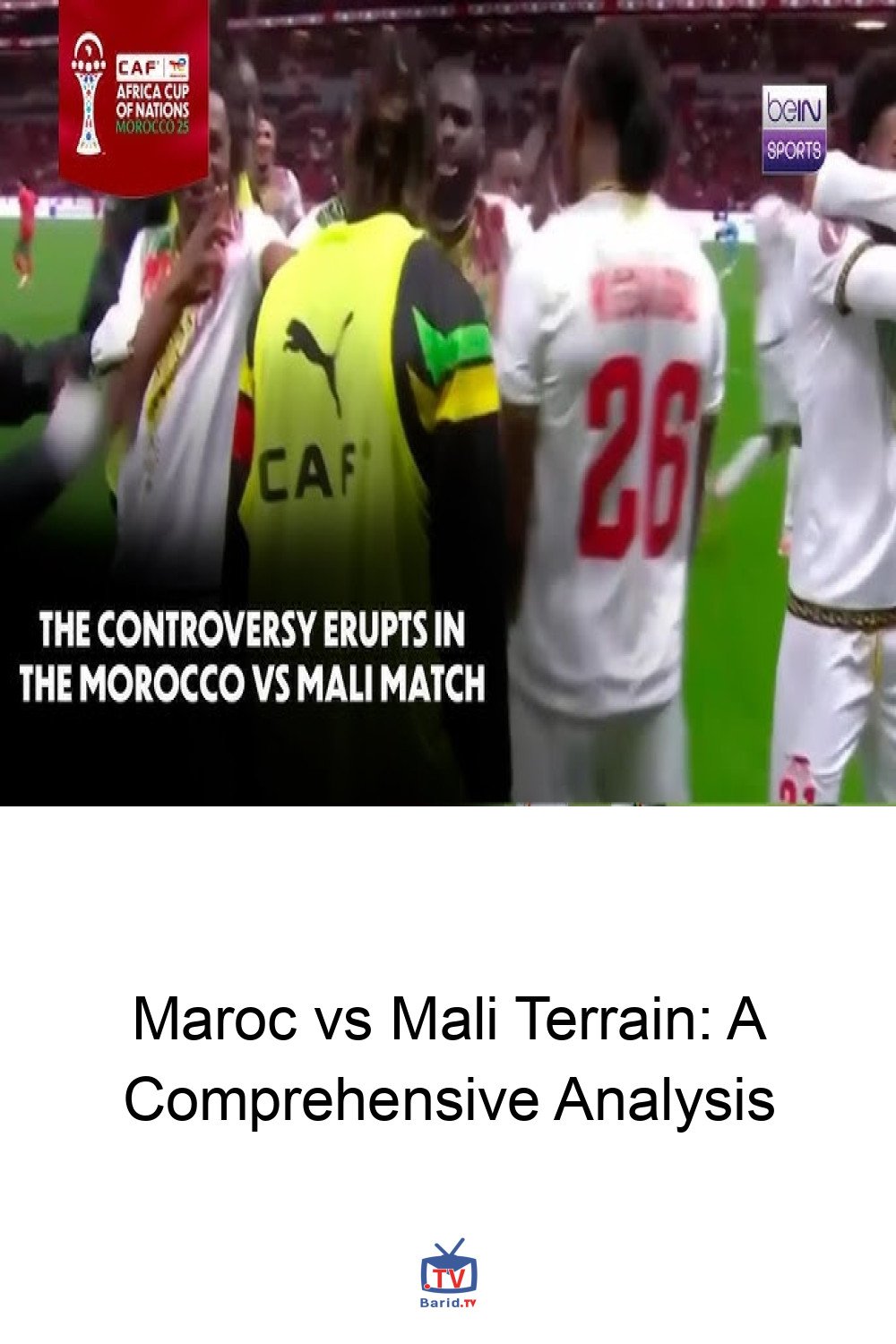
Introduction to Maroc vs Mali Terrain
The terrain of Morocco and Mali, two countries in the African continent, is vastly different. Morocco, located in the northwest, has a diverse terrain ranging from mountains to deserts, while Mali, situated in the west, is characterized by its vast desert landscapes and savannas. This article will delve into the comparison of the terrain of these two countries, particularly in the context of their recent football match.
Maroc vs Mali: A Football Perspective
The recent match between Morocco and Mali in the Africa Cup of Nations has sparked interest in the comparison of their terrains. The match, which ended in a 1-1 draw, saw both teams displaying impressive skills and strategies. However, the terrain of the host country, Morocco, may have played a significant role in the outcome of the match.
Morocco’s terrain, with its diverse landscapes, may have given the team an advantage in terms of familiarity and adaptation.
- Mali’s terrain, characterized by vast deserts and savannas, may have required the team to adapt to a different playing style.
Terrain Comparison: Morocco and Mali
Morocco’s terrain is divided into several regions, including the Atlas Mountains, the Rif Mountains, and the Sahara Desert. The country’s diverse landscape has resulted in a variety of climates, from Mediterranean to desert. In contrast, Mali’s terrain is largely dominated by the Sahara Desert, with some areas of savannas and grasslands.
- Morocco’s mountainous regions, such as the Atlas Mountains, provide a range of ecosystems and support a diverse array of flora and fauna.
- Mali’s desert landscapes, such as the Sahara Desert, are characterized by extreme heat and aridity, with limited vegetation and wildlife.
Impact of Terrain on Football
The terrain of a country can significantly impact the way football is played. The climate, geography, and altitude of a region can affect the physical condition of players, the ball’s movement, and the team’s strategy. In the case of Morocco and Mali, the difference in terrain may have influenced the teams’ performance in the recent match.
The altitude of Morocco’s terrain, particularly in the Atlas Mountains, may have given the team an advantage in terms of physical conditioning. The country’s diverse landscape may have also allowed the team to train in different environments, preparing them for various playing conditions.
Conclusion
In conclusion, the terrain of Morocco and Mali is vastly different, with Morocco’s diverse landscape and Mali’s desert-dominated terrain. The recent match between the two countries in the Africa Cup of Nations highlights the significance of terrain in football. Understanding the impact of terrain on football can provide valuable insights into the teams’ performance and strategies.
FAQ
- Q: What is the main difference between Morocco’s and Mali’s terrain?
- A: Morocco’s terrain is diverse, with mountains, deserts, and coastal regions, while Mali’s terrain is largely dominated by the Sahara Desert.
- Q: How does the terrain affect football?
- A: The terrain can impact the physical condition of players, the ball’s movement, and the team’s strategy, with different climates, geographies, and altitudes requiring adaptations in playing style.
- Q: What was the outcome of the recent match between Morocco and Mali?
- A: The match ended in a 1-1 draw, with both teams displaying impressive skills and strategies.





Comments are closed.