
Radiation-Detection Systems Are Quietly Running in the Background All Around You
Meanwhile, a network of government and DIY radiation-monitoring programs is quietly running globally, ensuring that if a major disaster like Fukushima or Chornobyl were to happen again, the world would know almost straight away.
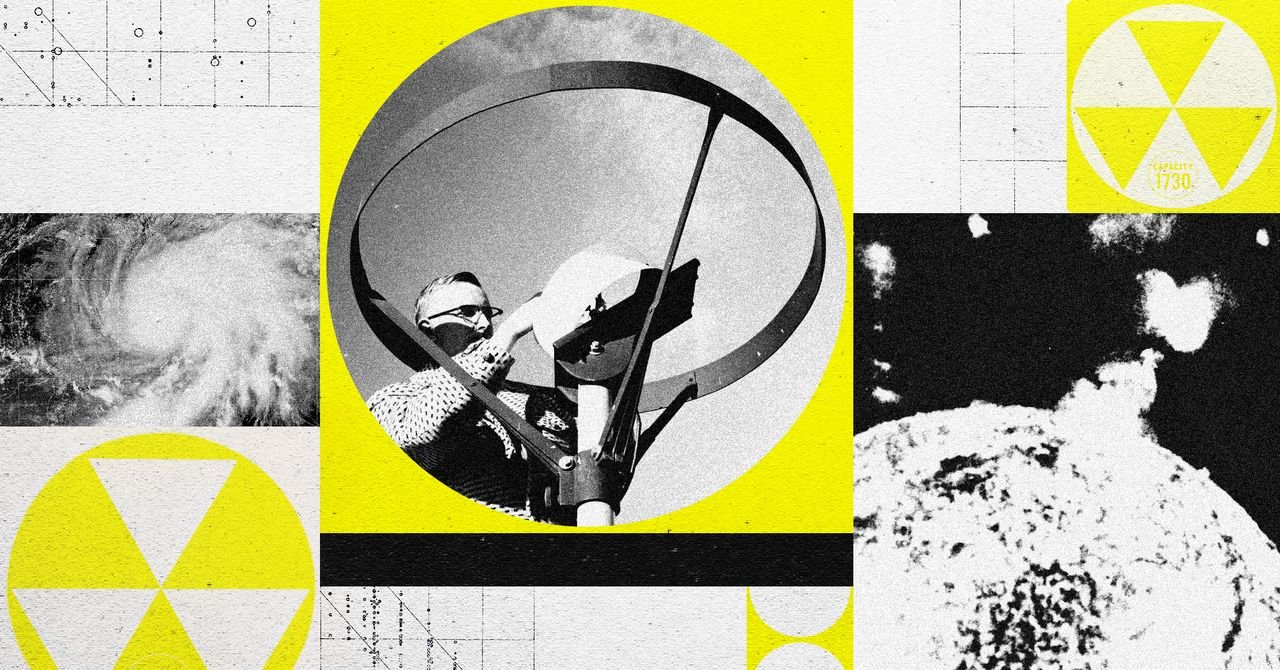
PHOTO-ILLUSTRATION: WIRED STAFF; GETTY IMAGES
The Confinement Building at Chornobyl
However, the confinement building at Chornobyl, which was damaged in February by a drone armed with explosives, has compromised its radiation-blocking abilities, the International Atomic Energy Agency (IAEA) confirmed.
Consequently, the specter of a potential leak remains unless more significant repairs are carried out.
Radiation Occurs Naturally Everywhere
Moreover, radiation occurs naturally everywhere, produced by food we eat, and even by tissues in our own bodies.
Think of it like a grand carnival of subatomic particles – neutrons, electrons, and photons – that whizz around, always in motion, always present.
Monitoring Radiation Levels
However, when disaster struck Chornobyl in 1986, a huge cloud of radioactive material spread across much of Europe, and it was how the world found out about the accident.
Therefore, many countries, including Austria and the UK, installed radiation detectors that constantly monitor for any uptick in radioactivity.
DIY Radiation Detectors
In addition, some radiation-monitoring networks are run by volunteers and researchers, like Kim Kearfott, professor of nuclear engineering and radiological sciences at the University of Michigan.
She has an array of radiation sensors on the roof of her university building, in her lab, and in another building nearby.
Weather and Radiation Levels
Meanwhile, weather conditions like wind, rain, and snowfall can move radiation readings, too.
For instance, in 2023, ambient gamma radiation levels in Hong Kong rose after heavy rainfall washed radioactive decay products of radon out of the air and brought those decay products down to ground level.
Real-Time Monitoring
Consequently, some countries, such as Poland, publish data from their national radiation-monitoring systems in near real time on the open web, and such data is also available for many nations via the European Commission.
Therefore, at the offices of the IAEA in Austria, staff have access to their own monitoring data, which appears on a big map of the world.
Source: Link