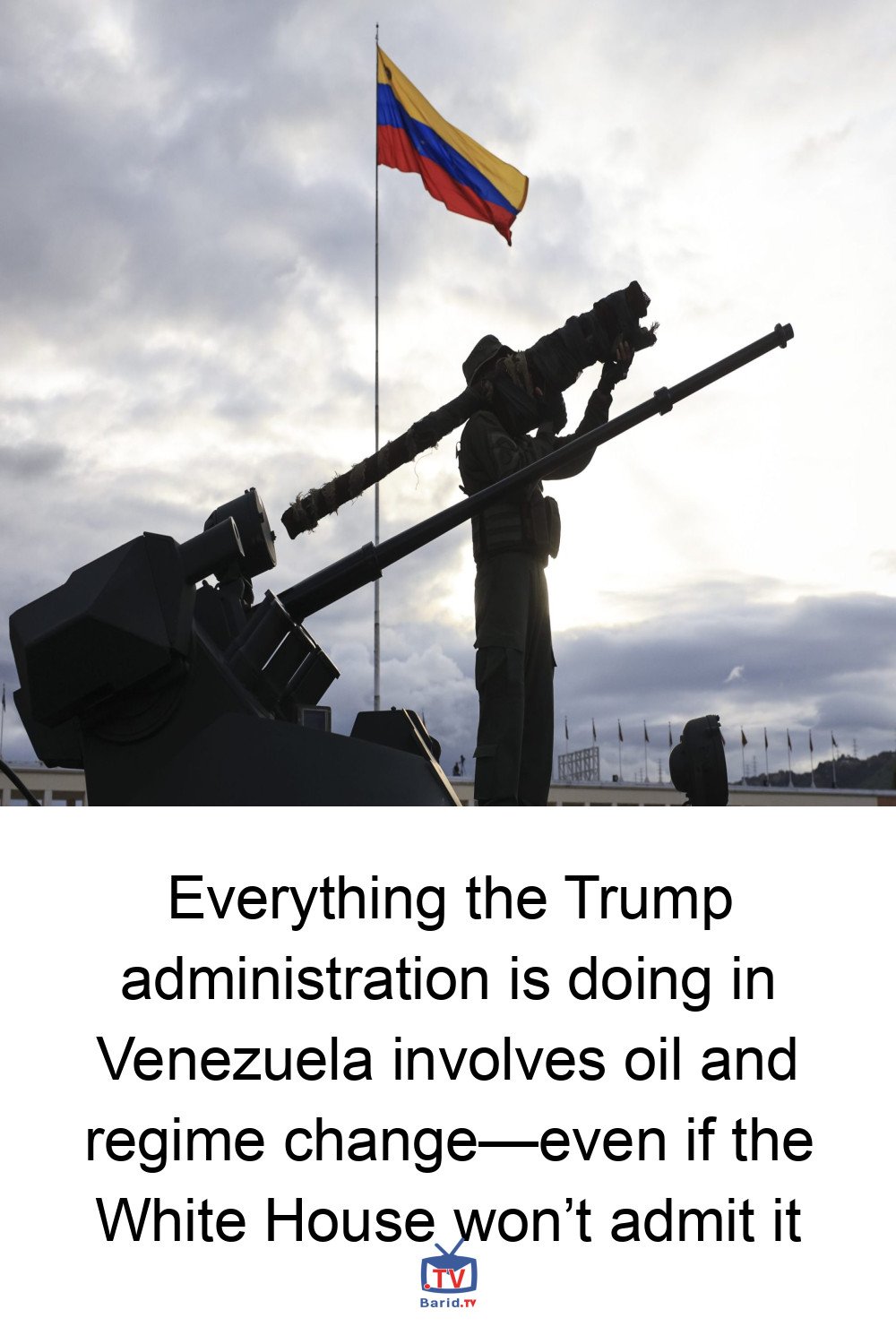
Everything the Trump Administration is Doing in Venezuela Involves Oil and Regime Change
Meanwhile, the U.S. seizure of a massive oil tanker offshore of Venezuela this week represents a brazen escalation of the Trump administration’s repeated military incursions in the area.
It’s also a broader sign of the increasing involvement of the U.S. in South America’s petroleum politics.
Recommended Video: The U.S. paces the world in oil and gas production, but President Trump’s new national security strategy—the so-called “Trump corollary”—emphasizes greater U.S. control of the Western Hemisphere, including much more influence over South America, which increasingly leads the globe in new oil output growth.
Regime Change and Oil: The Trump Administration’s True Motivations
However, almost everything the Trump administration is doing in South America—from pressuring Venezuela to a $20 billion Argentina bailout to defending Guyana’s territorial waters—is at least related to the black gold that is crude oil.
While the White House emphasizes national security concerns over drug trafficking and immigration, Venezuela is home to the world’s largest proven oil reserves.
Regime change and new laws opening Venezuelan oil to more U.S. and foreign investment could lead to much greater oil flows.
The Role of Oil in Venezuela’s Future
Consequently, Trump is a big fan of controlling oil volumes in order to lower prices at the pump—a major political bellwether for him—without having to lean on OPEC.
“In the next five years, we’re going to see a lot more oil coming from South America,” said Jorge León, head of geopolitical analysis for the Rystad Energy research firm.
That’s a big “if,” however. Venezuelan President Nicolás Maduro will likely resist tooth and nail.
The Geopolitics of Oil in South America
Moreover, oil is a “piece of the puzzle” in all of Trump’s interventions in Venezuela and the broader continent, but not necessarily the key motivating factor.
Francisco Monaldi, director of the Latin America Energy Program at Rice University’s Baker Institute for Public Policy, said oil is a “piece of the puzzle” in all of Trump’s interventions in Venezuela and the broader continent, but not necessarily the key motivating factor.
However, the domestic U.S. oil business is maturing and showing signs of plateauing, Monaldi said, and the U.S. wants more control of global petroleum outside of the Middle East and Russia.
The Consequences of Trump’s Actions in Venezuela
Meanwhile, intense Venezuela focus has led to the country being home to the world’s largest proven oil reserves but less than 1% of global oil production.
Once a major player churning out nearly 4 million barrels of oil daily, Venezuela’s volumes have plunged from 3.2 million barrels daily in 2000 down to about 960,000 barrels today under the authoritarian socialist regimes of Maduro and his predecessor, Hugo Chávez.
Outside of arguably Iran, no country gets under Trump’s skin more than Venezuela in either of Trump’s presidential terms thus far.
The Corporate Role in Venezuela’s Oil Industry
However, the corporate role in Venezuela’s oil industry is also significant, with companies such as Exxon Mobil and Chevron already helping to grow South American production.
As the only U.S. oil producer in the country—Chevron has worked in Venezuela for a century—Chevron produces about 25% of Venezuela’s crude with state oil company PDVSA.
However, Venezuela ships about 80% of its oil to China under deep discounts because of U.S. sanctions.
Source: Link