
Trump’s AI Executive Order: A Double-Edged Sword for Startups
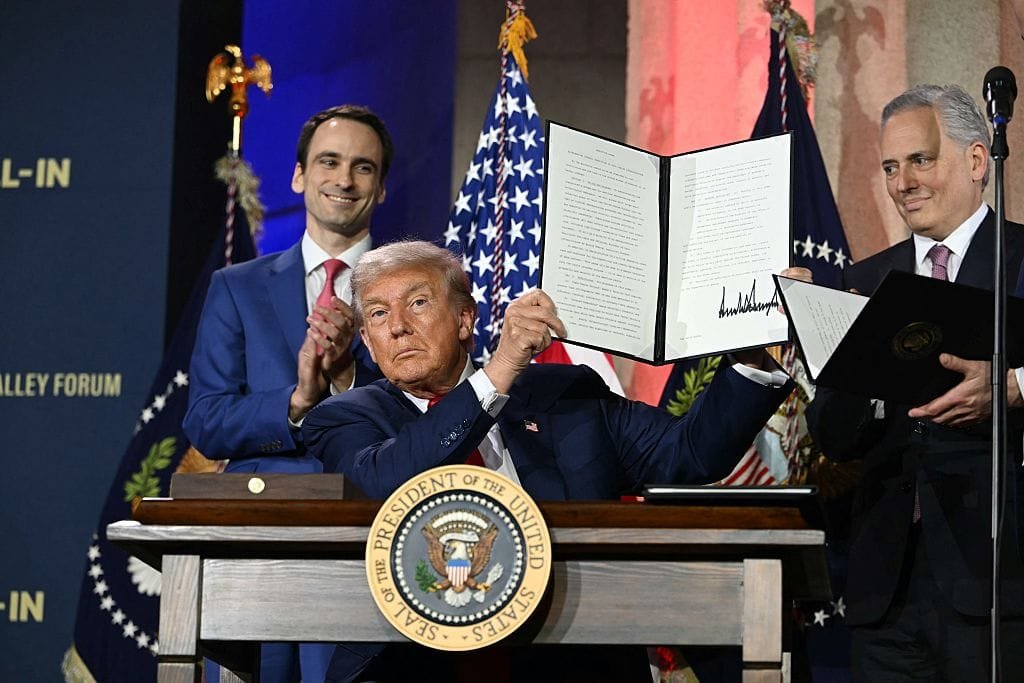
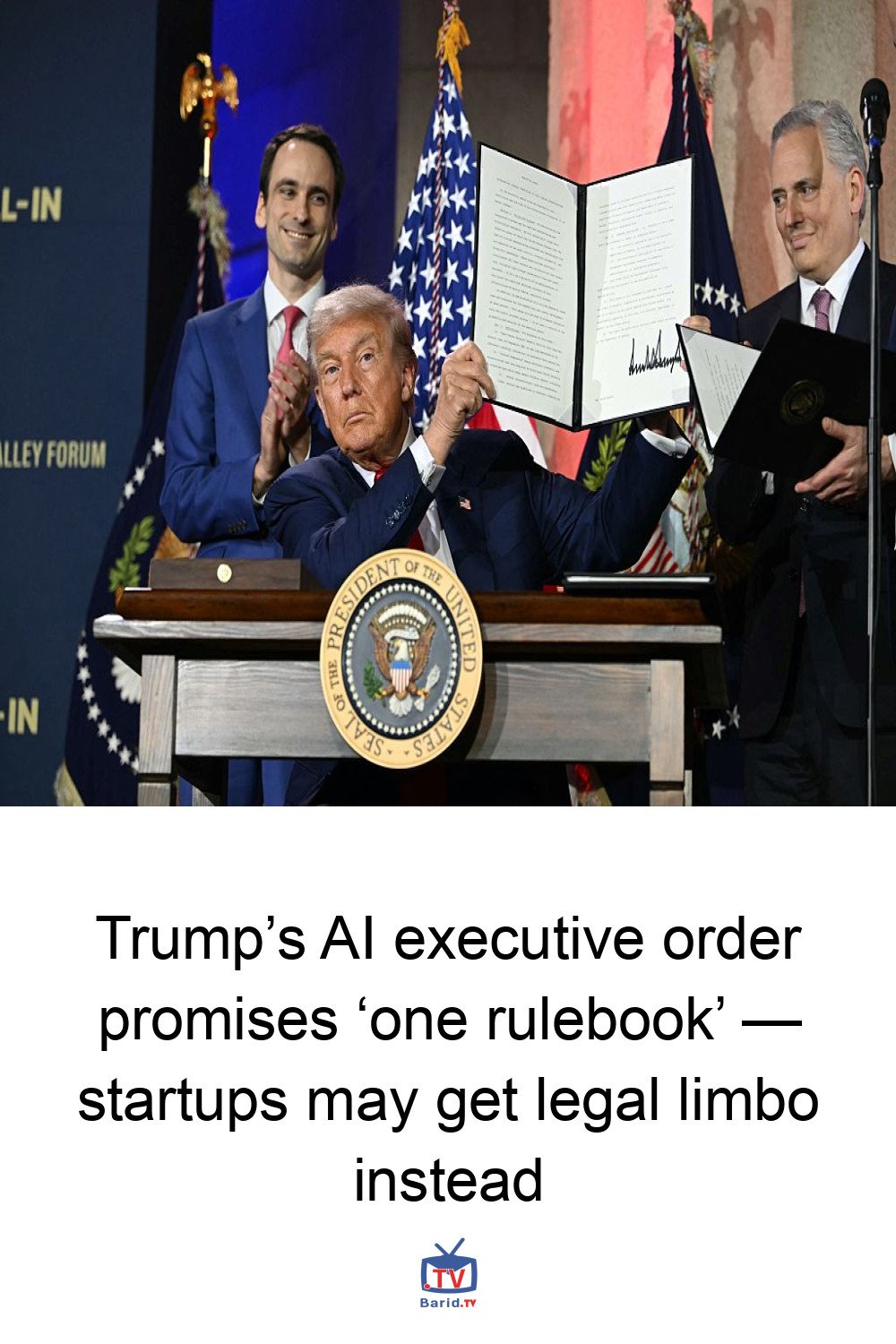
President Donald Trump signed an executive order Thursday evening that directs federal agencies to challenge state AI laws, arguing that startups need relief from a “patchwork” of rules.
However, legal experts and startups say the order could prolong uncertainty, sparking court battles that leave young companies navigating shifting state requirements while waiting to see if Congress can agree on a single national framework.
Meanwhile, the order’s impact on startups remains unclear, with some arguing that it could reduce uncertainty by centralizing the fight over AI regulation in Washington.
The Order’s Key Provisions
The order, titled “Ensuring a National Policy Framework for Artificial Intelligence,” directs the Department of Justice to set up a task force within 30 days to challenge certain state laws on the grounds that AI is interstate commerce and should be regulated federally.
It gives the Commerce Department 90 days to compile a list of “onerous” state AI laws, an assessment that could affect states’ eligibility for federal funds, including broadband grants.
Consequently, the order also asks the Federal Trade Commission and Federal Communications Commission to explore federal standards that could preempt state rules and instructs the administration to work with Congress on a uniform AI law.
Startups Face Uncertainty
Lawmakers in both parties have argued that without a federal standard, blocking states from acting could leave consumers exposed and companies largely unchecked.
Moreover, the order’s impact on startups is a major concern, with some arguing that it could create immediate headwinds for young companies navigating conflicting state and federal demands.
Sean Fitzpatrick, CEO of LexisNexis North America, U.K., and Ireland, tells TechCrunch that states will defend their consumer protection authority in court, with cases likely escalating to the Supreme Court.
Experts Weigh In
Arul Nigam, co-founder at Circuit Breaker Labs, a startup that performs red-teaming for conversational and mental health AI chatbots, echoed those concerns.
He noted that the patchwork of state AI laws does hurt smaller startups in his field and that he is hopeful Congress can move more quickly now to pass a stronger federal framework.
Andrew Gamino-Cheong, CTO and co-founder of AI governance company Trustible, told TechCrunch the EO will backfire on AI innovation and pro-AI goals: “Big Tech and the big AI startups have the funds to hire lawyers to help them figure out what to do, or they can simply hedge their bets.”
Conclusion
The Trump administration’s executive order on AI regulation has sparked a heated debate over its impact on startups.
While some argue that it could reduce uncertainty, others say it could prolong uncertainty and create immediate headwinds for young companies.
Ultimately, the order’s impact on startups remains unclear, and its effects will likely be felt for months to come.
Source: Link